



DETENTION & RETENTION PONDS
In Richmond county, developed land requires that property owners place a detention or retention pond on the property to keep water flow as natural as possible across the soil surface. This storm water needs to be slowed down so that it does not wash out creeks and riverbanks, and the ponds that do this must be properly maintained by property owners to ensure they meet this goal.
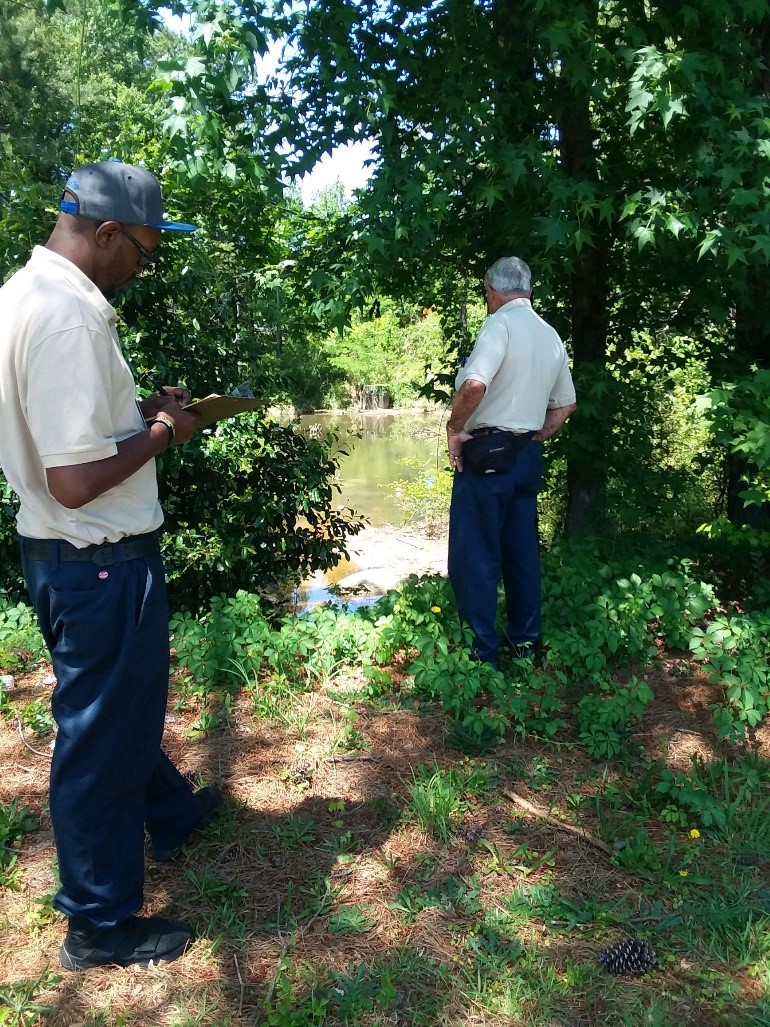
Richmond county mosquito control inspects private detention and retention ponds throughout the county to ensure that ponds are properly maintained to minimize mosquito habitats/ mosquito breeding in these locations, which will reduce the risk of mosquito-borne disease. With over 900 private storm water ponds in the county, and more being built as development continues, we stay very busy ensuring that ponds are functioning properly and that they are not contributing to mosquito problems.
Retention ponds, while serving a crucial role in stormwater management, can sometimes become breeding grounds for mosquitoes if not properly maintained. Proper maintenance includes regular inspections to identify and address potential issues such as clogged inlets, debris buildup, or areas of stagnant water. Vegetation management: ensuring that vegetation doesn’t obstruct water flow or create shaded areas that encourage mosquito breeding. Addressing stagnant water using aeration or introducing mosquito predators like fish or dragonflies can help control mosquito populations.
Ponds that are not properly maintained that hold standing water can breed millions of mosquitoes each season, and this is just one pond! Our pond technicians treat the ponds with Bacillus thuringiensis israelensis (BTI), a bacterium that is found naturally occurring in soil. BTI stops mosquito larvae from hatching into adults, but it does not harm humans, fish, or other animals.
What you can do:
If you see a retention or detention pond in your area that has brush growing in it, or that you feel is contributing to mosquito problems in your area, please call and report to 311 (706-821-2300) or email our Pond Program Manager, Sheri Edwards, at
Sheri.Edwards@dph.ga.gov so that Richmond County Mosquito Control can inspect it.
Pond Inspectors dipping for mosquito larvae
Pond Inspector spraying BTI (Bacillus thuringiensis israelensis) to prevent larvae from hatching into adult mosquitoes